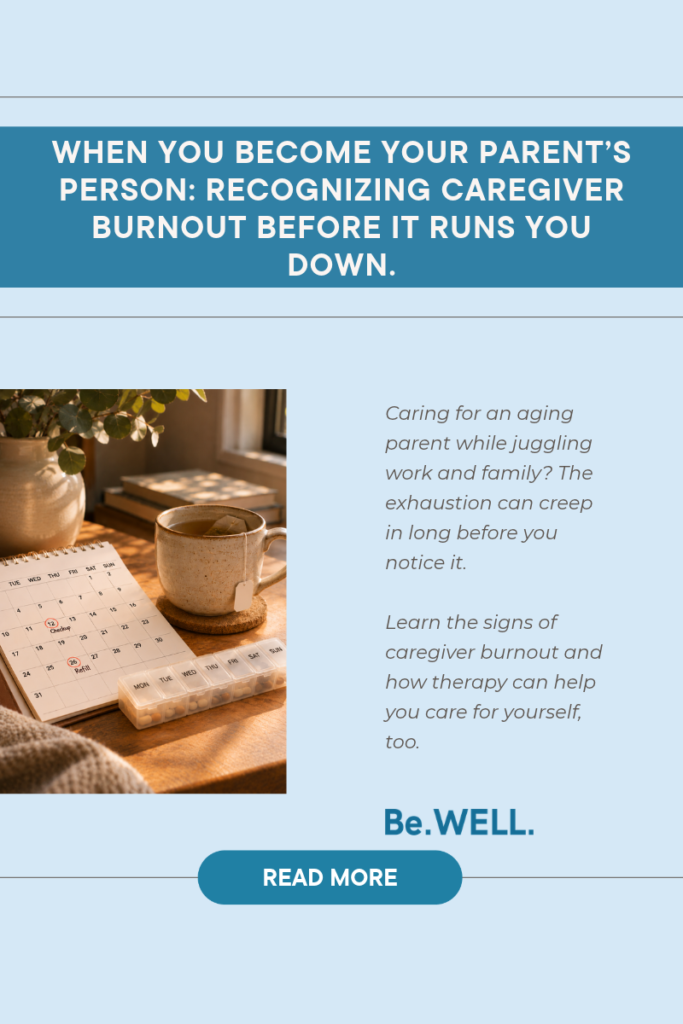
It usually starts with a phone call. A fall in the kitchen. A doctor who wants to “talk about next steps.” A neighbor who mentions your dad seemed confused at the mailbox. Somewhere in that moment, without a meeting or a vote, you became the person who handles it.
At first it feels manageable. You add a few appointments to your calendar, pick up prescriptions on the way home, and call more often. Then the calls become daily. The appointments multiply. You start answering work emails from hospital waiting rooms, and your own life slowly shrinks to fit around someone else’s needs.
If that sounds familiar, you are far from alone. According to AARP and the National Alliance for Caregiving, 63 million Americans are now family caregivers, a 45 percent jump in ten years. In New York and New Jersey, roughly one in four adults is caring for someone. Many of them are doing it while holding down a job, and plenty are still raising kids of their own.
What caregiver burnout actually feels like
Caregiver burnout rarely announces itself. It tends to creep in, disguised as just being busy or just being tired. Over time, the exhaustion stops lifting after a good night’s sleep.
Some of the common signs include:
- Feeling irritable or short-tempered with the parent you love, then guilty about it afterward
- Dreading phone calls, even from friends
- Losing interest in things that used to restore you
- Getting sick more often or noticing new aches, headaches, or trouble sleeping
- Feeling numb, detached, or like you’re running on autopilot
- Resenting siblings or family members who seem to do less
- Wondering, quietly, when you get your own life back, and then feeling ashamed for thinking it
That last one matters. Many caregivers carry a heavy layer of guilt on top of the exhaustion. They love their parent and want to help. They also want to sleep through the night, take a vacation, or simply sit in a quiet room. Both things are true at once, and that tension is exhausting on its own.
Why this season of life hits so hard
Caring for an aging parent is not only a logistical job. It quietly rearranges the oldest relationship you have. The person who once drove you to the doctor now needs you to drive them. Conversations about medication, finances, or giving up the car can feel like you’ve swapped places, and that role reversal can stir up grief, frustration, and old family history all at once.
Timing plays a part too. Many adult caregivers are in their 40s, 50s, and 60s, which is often the peak of career responsibility and sometimes overlaps with teenagers at home or kids heading to college. Researchers studying the so-called sandwich generation have found that employed women caring for two generations are especially vulnerable to depressive symptoms. The pressure comes from every direction.
There is also the length of it. The 2025 caregiving report found that a third of caregivers have been in the role for five years or more. This is rarely a sprint. Pacing yourself is not selfish; it’s how you stay able to show up.
Small shifts that make a real difference
There’s no perfect formula, but a few changes can ease the load:
Name what you’re carrying. Write down every task you handle in a week, from refilling prescriptions to managing bills. Seeing it on paper often makes it easier to ask for help with specific pieces instead of a vague “I need support.”
Let some things be good enough. Not every meal needs to be homemade, and not every visit needs to last three hours. Lowering the bar in places that don’t matter protects your energy for the places that do.
Protect one thing that belongs to you. A weekly walk, a standing dinner with a friend, an hour on Saturday morning. Treat it like an appointment you would keep for your parent.
Use the help that exists. In New York City, NYC Aging’s Caregiver Program offers counseling, support groups, and respite referrals through Aging Connect at 212-AGING-NYC. New Jersey residents can connect with their county’s Area Agency on Aging for similar support.
How therapy helps caregivers
Therapy gives you a space where you don’t have to be the capable one. You can say the thing you can’t say to your parent or your siblings: that you’re angry, scared, tired, or grieving someone who is still here.
A therapist can help you sort out what is yours to carry and what isn’t, set boundaries that don’t come loaded with guilt, and work through the family dynamics that tend to surface when a parent’s health declines. For many people, it’s also the first time in months that someone has asked how they are doing.
At BeWELL Psychotherapy and Wellness, our therapists work with adults who are caring for aging parents, balancing work and family, and reconnecting with siblings in the middle of it all. We see clients in our NYC and Hoboken offices and online across New York and New Jersey.
You can take care of someone you love and still need care yourself.
Get in touch with us to book your visit. (646) 863-0101 | bewellpsychotherapy.com