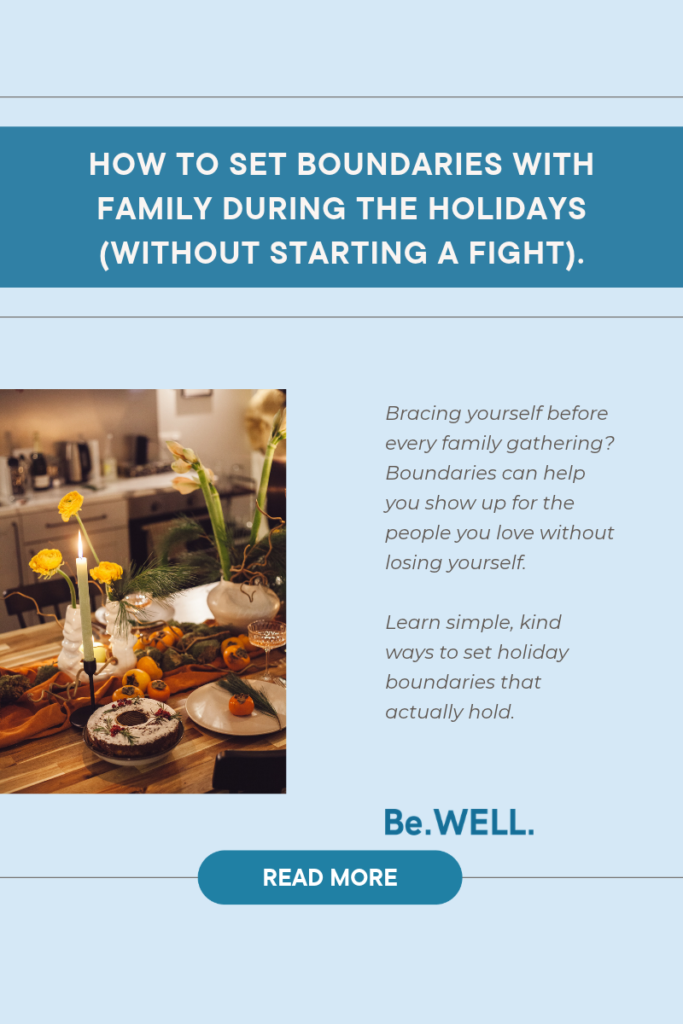
Do you feel yourself bracing before you even walk through the door? Do you leave family gatherings replaying a conversation you wish had gone differently?
You’re far from alone. Year after year, worries about challenging family dynamics rank among the most common sources of holiday stress in national surveys. Setting boundaries doesn’t mean loving your family less. A good boundary is what lets you show up for them without losing yourself.
At BeWELL, we think of boundaries as something that protects family relationships over the long run, rather than something that pushes people away.
Why Family Gatherings Feel So Different
Time with family can pull us back into roles we outgrew long ago, like the peacekeeper or the “responsible one.” Family systems therapy looks at exactly this: how each person’s role keeps a family’s patterns in place, often without anyone meaning to.
That’s why one comment from a parent can land harder than the same words from a coworker. The comment carries years of history with it, and your body often reacts before your adult self has a chance to respond.
It also explains why you might feel like a different person at home than you do in your everyday life in New York or Hoboken. Old patterns are familiar, and familiar is easy to slip back into, even when it no longer fits.
What a Healthy Holiday Boundary Looks Like
A boundary is a decision about what you will do, not a rule for what others must do. You can’t control whether a relative asks about your love life, but you can decide how you’ll respond. For example:
“I’ll stay through dinner and head home around 8.”
“I’d rather not talk about my relationship today, but I’m happy to catch up on anything else.”
You might step outside for a walk when a conversation starts to heat up.
You might book a hotel nearby instead of staying in the family home.
None of these require anyone else to change. That’s what makes them easier to hold, and less likely to turn into an argument.
It can help to ask:
Which moments last year left me feeling worst?
What would I need to feel steadier this time?
How to Set Boundaries Without Starting a Fight
Decide in advance. Boundaries are easier to hold when you’ve thought them through before you’re in the room. Pick one or two that matter most rather than trying to change everything at once.
Keep it short and warm. A brief, kind statement usually lands better than a long explanation or a debate. You don’t owe anyone a detailed justification.
Find an ally. A sibling, partner or cousin who knows your plan can help steer a conversation somewhere else.
Expect some pushback. Family members may test a new boundary at first. Staying calm and consistent matters more than finding the perfect words.
Plan for afterward. Build in some quiet time once the gathering is over, whether that’s a walk, a call with a friend or an early night.
Let go of the outcome. You can set a boundary kindly and still have someone feel disappointed. Their reaction is theirs to manage, and it doesn’t mean you did it wrong.
When Therapy Can Help
If family gatherings regularly leave you anxious or depleted, a therapist can help you understand where those reactions come from and rehearse responses before the holidays arrive. Many people find that practicing a boundary out loud, in a calm setting, makes it much easier to hold when the moment comes.
Therapy can also help with the harder questions underneath, like how to stay close to family members whose views or choices are painful for you, or when it might be time to step back.
At BeWELL, our therapists use relational and family systems approaches, whether you come on your own or with family members.
What would it take to leave this year’s gathering feeling more like yourself?
With the holidays this close, now is a good time to start. Schedule a free consultation and we’ll match you with a therapist at our NYC or Hoboken office, with weekend sessions available.